 Contact
 Donate
 Languages
 Events

 Visit Greenways
 Future Projects
 Get Involved
 How We Work
A big, bee-eautiful congratulations to our 2026 Greenway Quest prize winners: Lisa G., Matt R., Cathy C., Juan M., Calvin C., Adel M., Christine L., Susan V., Logan B., and Laura H.! Each winner receives a pack of Saint Louis Zoo Adventure Passes and a Great Rivers Greenway bag, sticker, water bottle, map, and native prairie flower seeds.
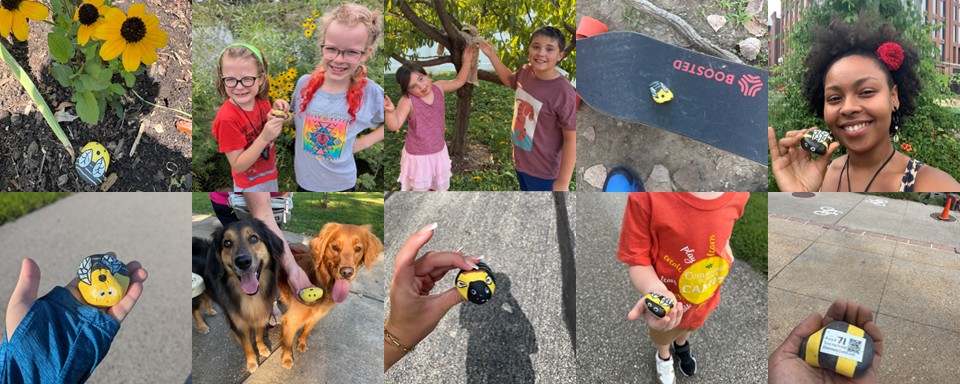
Great Rivers Greenway and the Saint Louis Zoo have teamed up for the fifth annual Greenway Quest Scavenger Hunt! This year we’ve hidden hundreds of hand painted rocks that look like four different species of native bees found along the greenways: the American bumblebee, brown-belted bumblebee, two-spotted bumblebee, and just a few of the endangered rusty patched bumblebee.
Look for rocks hidden across all 140 miles of greenways in St. Louis City, St. Louis County and St. Charles County. Find a greenway near you here!
- You can find them along the edges of greenways or at trailheads, never far away from the path and never on private property.
- There are no rocks hidden at the Saint Louis Zoo.
- If you find more than one bee rock on your adventure, please only take one so other people can join in the fun, too!
- Be sure to log your rock in the form below to be eligible to win prizes that include Zoo Adventure Passes and Greenway Goodies!
Thanks to the teen volunteers of the Saint Louis Zoo Alive (Active Leaders in Volunteer Education), the Education Staff, and the many volunteers who painted all 300 rocks for us!
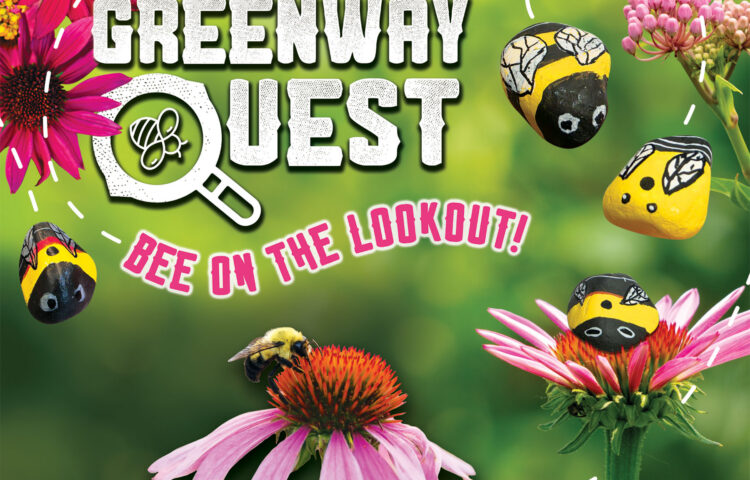
Wondering Which Bee is Featured on Your Rock?
1-100: American Bumblebee
101-200: Brown Belted Bumblebee
201-300: Two-Spotted Bumblebee
301-302: The endangered Rusty Patch Bumblebee (only two in the whole bunch!)
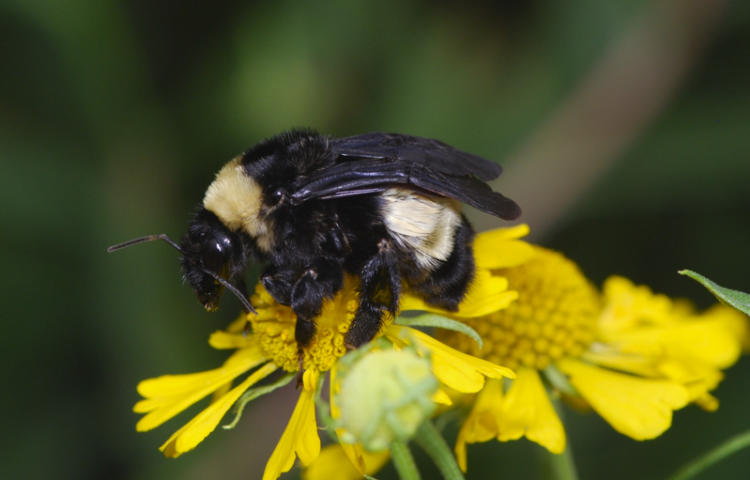
American Bumble Bee
- Look for a classic, large bumblebee with a mostly black abdomen (rear body segment) that features a striking yellow band right across the middle. Unlike many other bees, its head and face are mostly solid black.
- This bee is a true icon of North American fields, but it needs our help. Over the last few decades, its population has declined significantly due to habitat loss. Spotting one is a special treat and a reminder of why planting native wildflowers in our yards is so important!
- Bombus pensylvanicus
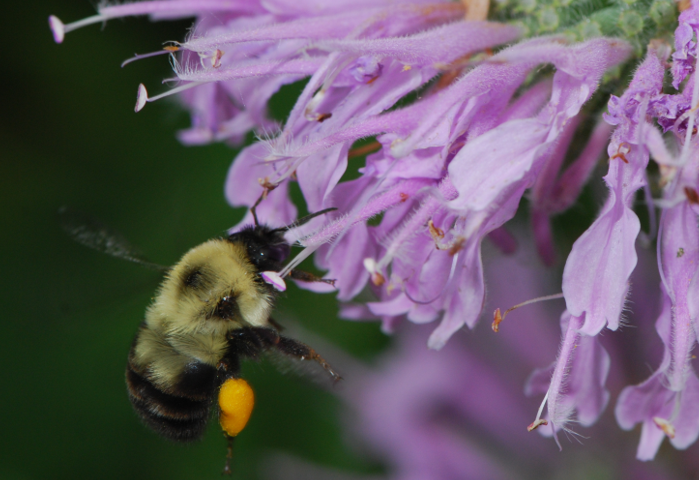
Two-Spotted Bumblebee
- True to its name, if you look closely at the top of its abdomen, you’ll see two distinct patches of yellow hair that often look like a tiny, stylized “W” or two little thumbprints side-by-side.
- These bees are the early birds of the insect world! They are typically the very first bumblebees to emerge in the spring, brave enough to fly in cooler weather to get a head start on gathering nectar from early-blooming trees and flowers.
- Bombus bimaculatus
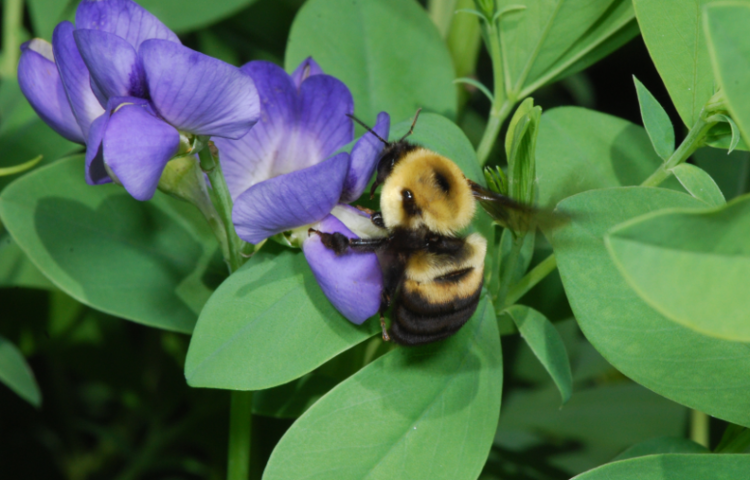
Brown-Belted Bumblebee
- This bee has a crescent-shaped band of brown or grayish-tan hair right along the upper edge of its abdomen, sandwiched between sections of yellow and black.
- If you have a garden, this is likely the bee you will see the most. Brown-belted bumblebees are highly adaptable, incredibly resilient, and love open spaces like city parks, residential gardens, and agricultural fields.
- Bombus griseocollis
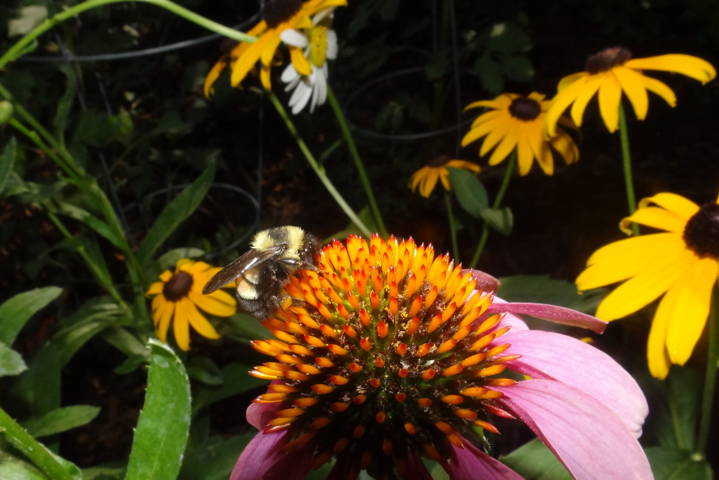
Rusty Patched Bumble Bee
The VIB
- This one is a little tricky! Look very closely at the bee’s abdomen (the rear section). Female workers and males have a distinct, crescent-shaped patch of rusty-red or orange hair right in the middle of their second segment. A great trick to make sure it’s not a common brown-belted bumblebee is to look at the border: the rusty patch on this bee is entirely surrounded by a “sea of yellow” hair, rather than being bordered by black.
- This bee is an absolute VIP of the insect world! In 2017, it became the very first bumblebee species in the United States to be officially listed as federally endangered. Once common across the East Coast and Midwest, they have disappeared from nearly 90% of their historical range. Because they are so rare and legally protected, please do not try to handle or catch them! Instead, if you think you spot one, use your phone to snap a clear photo and report it immediately to Bumble Bee Watch—your snapshot could help scientists track and protect a critical surviving colony!
- Bombus affinis
Want to Learn More?
Expand the sections below for the latest buzz!
UN-BEE-LIEVABLE BUT TRUE: Did you know?
- One out of every three bites of food you eat depends on pollinators! Bees, insects, birds, and small mammals pollinate more than 90% of the planet’s flowering plants and one-third of the human diet.
- While most of us are familiar with the European honeybee, Missouri is actually home to more than 450 species of native bees!
- Bumblebees are some of the most important pollinators to our ecosystems and agriculture. They use a fascinating technique called buzz pollination—vibrating their entire bodies at a high frequency to release stubborn pollen—to help grow everything from native wildflowers to the tomatoes on your dinner plate!
- Native bumblebees are large and fuzzy, with distinctive black and yellow (and sometimes orange) banded patterns. By carefully observing these specific color patterns and hairiness, entomologists (insect scientists) can identify individual species.
BEE A FRIEND: How Can You Help the Bees?
Historically, Missouri has been home to at least 11 native bumblebee species. Today, there are eight still considered regular inhabitants. The others are becoming increasingly rare, and a few are recognized as species of conservation concern in Missouri or are federally endangered.
- Plant a garden with native plants! Check out these helpful resources from the Saint Louis Zoo.
- Participate in a Community Science Project such as Bee Spotter or Bumble Bee Watch by collecting and contributing information about the bees you see, you can help protect their habitats and conservation strategies.
- Learn more about how the Saint Louis Zoo is working to protect native bees here.
Bee Log
Found a bee rock? Log it here for a chance to win prizes!
Check out where rocks have been found across the region!
| Finder | Rock # | Location |
|---|---|---|
| Alli V. | 38 | Centennial Greenway: Clayton/Ladue/Olivette |
| Gregory W. | 255 | Centennial Greenway: Wash U & Delmar Loop |
| Peyton A. | 33 | Centennial Greenway: Clayton/Ladue/Olivette |
| Kaycie W. | 141 | Centennial Greenway: Clayton/Ladue/Olivette |
| Vannah S. | 5 | Maline Greenway: Bellefontaine Neighbors |
| Naira N. | 2 | Mississippi Greenway: Jefferson Barracks |
| Dominik F. | 222 | Centennial Greenway: Clayton/Ladue/Olivette |
| Lisa G. | 220 | Gravois Greenway: South St. Louis County |
| Laura H. | 76 | Mississippi Greenway: Jefferson Barracks |
| Eric B. | 231 | Centennial Greenway: Clayton/Ladue/Olivette |
| Carol D. | 4 | Meramec Greenway: Fenton |
| Matt R. | 145 | Deer Creek Greenway: Webster/Maplewood/Brentwood |
| Aero L. | 71 | Centennial Greenway: Wash U & Delmar Loop |
| Dave E. | 208 | Maline Greenway: Bellefontaine Neighbors |
| Hayden S. | 122 | Dardenne Greenway: Cottleville/St. Peters |
| Conner B. | 228 | Dardenne Greenway: Cottleville/St. Peters |
| Elli F. | 43 | Deer Creek Greenway: Webster/Maplewood/Brentwood |
| Oliver L. | 18 | Gravois Greenway: South St. Louis County |
| Zori B. | 165 | Centennial Greenway: Wash U & Delmar Loop |
| Nichelle B. | 47 | Centennial Greenway: Wash U & Delmar Loop |
| Carey M. | 45 | Dardenne Greenway: Cottleville/St. Peters |
| Patty T. | 233 | Gravois Greenway: South St. Louis County |
| Daniel B. | 244 | Gravois Greenway: South St. Louis County |
| Bridget S. | 9 | Gravois Greenway: South St. Louis County |
| Renee P. | 217 | Dardenne Greenway: Cottleville/St. Peters |
| Lidia H. | 116 | Meramec Greenway: Fenton |
| Kelly L. | 205 | Western Greenway: Wildwood |
| Thomas K. | 207 | Meramec Greenway: Fenton |
| Add O. | 238 | Dardenne Greenway: Cottleville/St. Peters |
| Jessica R. | 144 | Boschert Greenway: St. Charles |
| TJ R. | 258 | Boschert Greenway: St. Charles |
| Michael V. | 138 | Gravois Greenway: South St. Louis County |
| Nick L. | 40 | Dardenne Greenway: Dardenne Prairie |
| Tanya B. | 129 | Gravois Greenway: South St. Louis County |
| Eleanor B. | 185 | Gravois Greenway: South St. Louis County |
| Ivan T. | 21 | Gravois Greenway: South St. Louis County |
| Rachael K. | 136 | Gravois Greenway: South St. Louis County |
| Dominick B. | 301 | Western Greenway: Wildwood |
| Dominick B. | 212 | Western Greenway: Wildwood |
| Hank R. | 147 | Centennial Greenway: Wash U & Delmar Loop |
| Cathy C. | 203 | Western Greenway: Wildwood |
| Luke T. | 44 | Dardenne Greenway: Cottleville/St. Peters |
| Sarah C. | 121 | Western Greenway: Wildwood |
| Sarah K. | 239 | Mississippi Greenway: Jefferson Barracks |
| Ben C. | 10 | Gravois Greenway: South St. Louis County |
| Molly R. | 202 | Western Greenway: Wildwood |
| John C. | 31 | Dardenne Greenway: Dardenne Prairie |
| Thomas M. | 32 | Boschert Greenway: St. Charles |
| Dan K. | 166 | Dardenne Greenway: Cottleville/St. Peters |
| Hannah S. | 49 | Boschert Greenway: St. Charles |
| Evan A. | 230 | Dardenne Greenway: Dardenne Prairie |
| Henry M. | 229 | Deer Creek Greenway: Webster/Maplewood/Brentwood |
| Cole M. | 201 | Mississippi Greenway: Cliff Cave |
| Trace M. | 272 | Deer Creek Greenway: Webster/Maplewood/Brentwood |
| Joselle M. | 241 | St. Vincent Greenway: Wellston/West End |
| Brad P. | 11 | Meramec Greenway: Wildwood |
| Charlie P. | 41 | Dardenne Greenway: Dardenne Prairie |
| Oliver G. | 16 | Mississippi Greenway: Cliff Cave |
| Calvin C. | 35 | Deer Creek Greenway: Webster/Maplewood/Brentwood |
| Liam D. | 128 | Dardenne Greenway: Dardenne Prairie |
| Liam M. | 131 | Dardenne Greenway: Dardenne Prairie |
| Christine L. | 17 | Mississippi Greenway: Riverfront Trail |
| Easton S. | 163 | Dardenne Greenway: Cottleville/St. Peters |
| Kashon J. | 109 | Maline Greenway: Bellefontaine Neighbors |
| RACHEL W. | 254 | Boschert Greenway: St. Charles |
| Kim B. | 135 | Dardenne Greenway: Cottleville/St. Peters |
| Devon S. | 37 | Boschert Greenway: St. Charles |
| Phyllis M. | 204 | Maline Greenway: Bellefontaine Neighbors |
| Stacy C. | 142 | Meramec Greenway: Wildwood |
| Charlotte C. | 104 | Maline Greenway: Bellefontaine Neighbors |
| Macie R. | 252 | Boschert Greenway: St. Charles |
| Ciara M. | 27 | Dardenne Greenway: Cottleville/St. Peters |
| Kathy K. | 237 | Dardenne Greenway: Cottleville/St. Peters |
| Kelisa H. | 263 | Mississippi Greenway: Cliff Cave |
| John H. | 126 | Fee Fee Greenway: Maryland Heights |
| Kimber R. | 25 | Mississippi Greenway: Riverfront Trail |
| Janet S. | 154 | Mississippi Greenway: Cliff Cave |
| Weston C. | 108 | St. Vincent Greenway: Wellston/West End |
| Nichole G. | 123 | St. Vincent Greenway: Wellston/West End |
| Natalie M. | 101 | St. Vincent Greenway: Wellston/West End |
| Carol F. | 153 | Meramec Greenway: Valley Park/Kirkwood |
| Holly C. | 161 | Deer Creek Greenway: Webster/Maplewood/Brentwood |
| Juan M. | 7 | Mississippi Greenway: Cliff Cave |
| Lucia C. | 8 | St. Vincent Greenway: Wellston/West End |
| Lauren B. | 245 | Fee Fee Greenway: Maryland Heights |
| Cecilia B. | 134 | Fee Fee Greenway: Maryland Heights |
| David M. | 157 | Missouri Greenway: Chesterfield/Wildwood |
| Susan V. | 243 | Fee Fee Greenway: Maryland Heights |
| Gail R. | 64 | St. Vincent Greenway: UMSL/Rock Road |
| Jennifer P. | 240 | Dardenne Greenway: Dardenne Prairie |
| Tunsie S. | 148 | Missouri Greenway: Chesterfield/Wildwood |
| Brijette B. | 197 | Gravois Greenway: South St. Louis County |
| Gail P. | 285 | Boschert Greenway: St. Charles |
| Harrison L. | 65 | Maline Greenway: Bellefontaine Neighbors |
| Lucia C. | 96 | St. Vincent Greenway: Wellston/West End |
| Jan S. | 81 | Centennial Greenway: St. Charles |
| Loretta D. | 196 | Sunset Greenway: Florissant |
| Leilahni J. | 93 | St. Vincent Greenway: Wellston/West End |
| Gary J. | 251 | River des Peres Greenway: South St. Louis City |
| Steph W. | 193 | Gravois Greenway: South St. Louis County |
| Sabina M. | 282 | Centennial Greenway: Wash U & Delmar Loop |
| Kevin B. | 151 | Mississippi Greenway: Riverfront Trail |
| Dilan F. | 85 | Gravois Greenway: South St. Louis County |
| Bill G. | 273 | Gravois Greenway: South St. Louis County |
| Layla M. | 66 | Maline Greenway: Bellefontaine Neighbors |
| Isarella P. | 295 | St. Vincent Greenway: Wellston/West End |
| Jessica R. | 98 | Boschert Greenway: St. Charles |
| James G. | 91 | Fee Fee Greenway: Maryland Heights |
| Rick W. | 281 | Dardenne Greenway: Cottleville/St. Peters |
| Cindy D. | 297 | Busch Greenway: Weldon Spring |
| Rowan H. | 78 | Dardenne Greenway: Cottleville/St. Peters |
| Cole M. | 59 | Centennial Greenway: Clayton/Ladue/Olivette |
| Rebecca S. | 156 | Western Greenway: Wildwood |
| Laura R. | 232 | Missouri Greenway: Hazelwood |
| Todd S. | 187 | Sunset Greenway: Florissant |
| Shaina R. | 160 | Fee Fee Greenway: Maryland Heights |
| Daria V. | 152 | Mississippi Greenway: Riverfront Trail |
| Mallorie M. | 48 | Meramec Greenway: Valley Park/Kirkwood |
| Robert G. | 293 | Centennial Greenway: Clayton/Ladue/Olivette |
| Laura H. | 175 | Deer Creek Greenway: Webster/Maplewood/Brentwood |
| Vincent P. | 70 | Meramec Greenway: Fenton |
| Josh K. | 143 | Meramec Greenway: Valley Park/Kirkwood |
| Meegan H. | 42 | Dardenne Greenway: Dardenne Prairie |
| Logan B. | 159 | Dardenne Greenway: Dardenne Prairie |
| Erika D. | 90 | Meramec Greenway: Wildwood |
| Ilayna G. | 260 | Western Greenway: Wildwood |
| Cade C. | 257 | Dardenne Greenway: Dardenne Prairie |
| jordan L. | 198 | Maline Greenway: Bellefontaine Neighbors |
| Alyssa S. | 69 | Gravois Greenway: South St. Louis County |
| Christina G. | 298 | Meramec Greenway: Wildwood |
| Patricia R. | 283 | Meramec Greenway: Fenton |
| Asher W. | 84 | Western Greenway: Wildwood |
| Thomas L. | 186 | Gravois Greenway: South St. Louis County |
| William F. | 74 | Western Greenway: Wildwood |
| Alex L. | 280 | Centennial Greenway: Wash U & Delmar Loop |
| Linda A. | 77 | Meramec Greenway: Eureka |
| Sam B. | 178 | Mississippi Greenway: Cliff Cave |
| Shannon C. | 290 | Dardenne Greenway: Cottleville/St. Peters |
| Evan H. | 167 | Mississippi Greenway: Jefferson Barracks |
| Justin W. | 162 | Meramec Greenway: Fenton |
| Lenore H. | 259 | Mississippi Greenway: Jefferson Barracks |
| Kevin H. | 73 | Mississippi Greenway: Jefferson Barracks |
| Adel M. | 250 | Mississippi Greenway: Cliff Cave |
| Marissa D. | 253 | Dardenne Greenway: Cottleville/St. Peters |
| Kyla S. | 174 | Dardenne Greenway: Cottleville/St. Peters |
| Leslie P. | 61 | River des Peres Greenway: South St. Louis City |
| Uniti H. | 225 | Mississippi Greenway: Riverfront Trail |
| Uniti H. | 53 | Mississippi Greenway: Riverfront Trail |
| Corban J. | 89 | Missouri Greenway: Hazelwood |
| Misty B. | 226 | Mississippi Greenway: Riverfront Trail |