 Contact
 Donate
 Languages
 Events

 Visit Greenways
 Future Projects
 Get Involved
 How We Work
As a regional park and trail agency, Great Rivers Greenway (GRG) works with dozens of communities, state and federal agencies, and private organizations throughout St. Louis County, St. Charles County and the City of St. Louis. These various partners are responsible for operation and maintenance of the greenways in their jurisdiction and thus, are responsible for establishing and enforcing municipal codes, ordinances, and laws that pertain to those greenways. With 20 different greenways and over 30 segments connecting dozens of communities, greenway users are subject to a variety of different rules that govern the use of the greenways. The intent of these recommendations is to provide guidance for communities as they develop or update their ordinances that apply to the greenway to allow for a better greenway user experience across the regional network.
In 2025, a group of greenway partners agreed to assist in the effort of developing recommendations for all partner agencies. This effort included evaluating existing partner ordinances as well as ordinances from other agencies outside of the St. Louis region. After evaluating existing ordinances, the team developed the following set of recommendations.
Section 1: Definitions
Defining the types of equipment authorized or unauthorized for usage on a greenway is extremely important, especially as the industry is experiencing a rise in personal electric vehicles. Communities in general are beginning to authorize a wider array of vehicles, sometimes including golf carts as well. Descriptions of those vehicles are below as well as two common descriptions of personal electric devices.
Mobility Device
The ADA defines mobility devices as an assistive device that some people with disabilities to get around, such as walkers, wheelchairs (manual or power-driven), or other power-driven devices. People with disabilities may use a variety of mobility devices based on their needs. State and local governments must allow a person with a disability who uses a wheelchair or other manually powered mobility aid into all areas where members of the public are allowed to go.
Golf Carts
In Missouri, a golf cart is legally defined by RSMo Section 304.034 as a motorized vehicle designed for golf courses that cannot exceed 20 mph, not intended for use on state or federal highways, and requires local municipal approval to operate on city streets.
Utility Vehicle (UTV)
Missouri laws define utility vehicles as any motorized vehicle manufactured and used exclusively for off-highway use, which is more than 50 inches, but no more than 80 inches in width, with an unladen dry weight of 3,500 pounds or less, traveling on four or six wheels, to be used primarily for landscaping, lawn care, or maintenance purposes. The width is measured from the outside of tire rim to outside of tire rim.
Personal Electric Vehicle (PEV)
A small, electric-powered vehicle designed for individual transportation, often used for short distances and recreational purposes. Another term used in the State of Missouri is Electric Personal Assistive Mobility Device (EPAMD), described below.
Electric Personal Assistive Mobility Device (EPAMD)
The State of Missouri defines an EPAMD as a self-balancing, two non-tandem wheeled device, designed to transport only one person, with an electric propulsion system with an average power of seven hundred fifty watts (one horsepower), whose maximum speed on a paved level surface, when powered solely by such a propulsion system while ridden by an operator who weights one hundred seventy pounds, is less than twenty miles per hour. (Missouri L. 2002 H.B. 1270 and H.B. 2032). The State has enacted these rules regarding their usage:
- An electric personal assistive mobility device may be operated upon a street, highway, sidewalk, and bicycle path. Every person operating such a device shall be granted all of the rights and be subject to all of the duties applicable to a pedestrian pursuant to chapter 304.
- Persons under sixteen years of age shall not operate an electric personal assistive mobility device, except for an operator with a mobility-related disability.
- An electric personal assistive mobility device shall be operated only on roadways with a speed limit of forty-five miles per hour or less. This shall not prohibit the use of such devices when crossing roadways with speed limits in excess of forty-five miles per hour.
- A city or town shall have the authority to impose additional regulations on the operation of an electric personal assistive mobility device within its city or town limits.
Examples of PEV or EPAMD electric devices/vehicles:
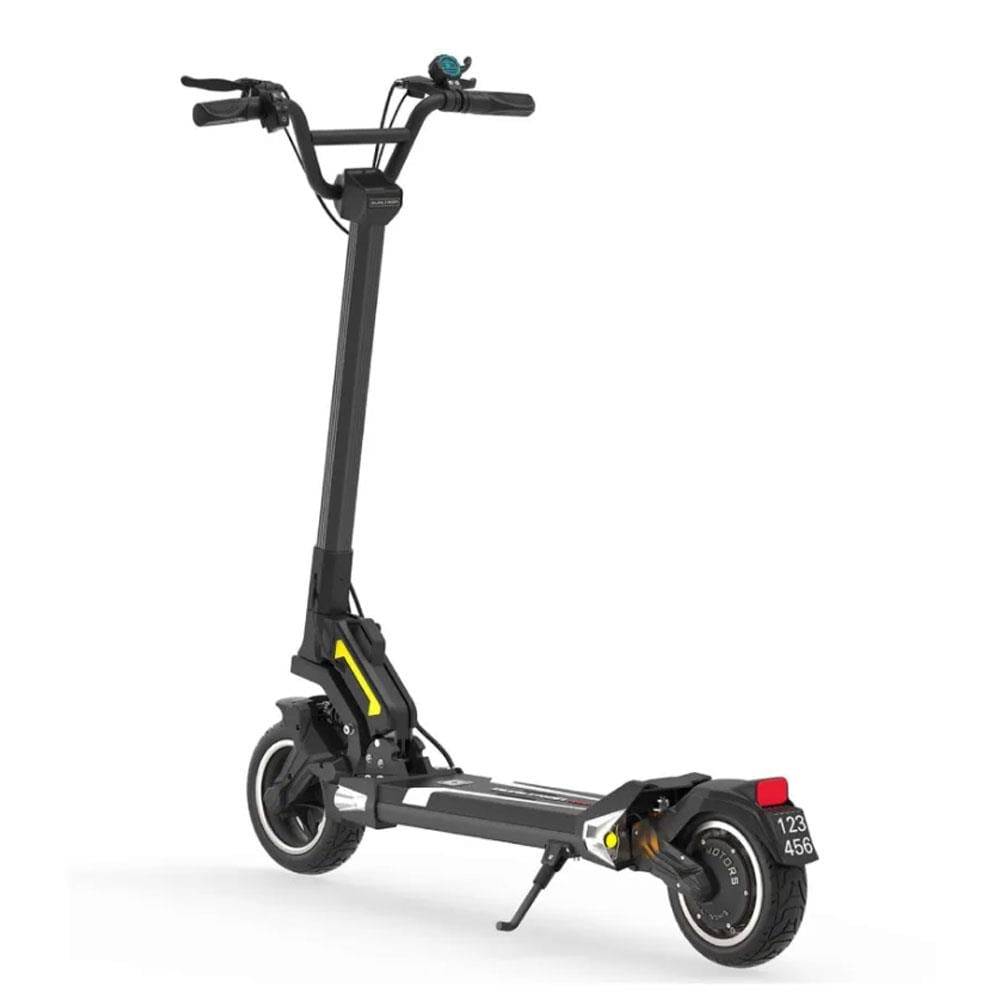
- Electric Scooters – two-wheeled vehicles with a platform to stand on a and a handlebar for steering (Figure 1)
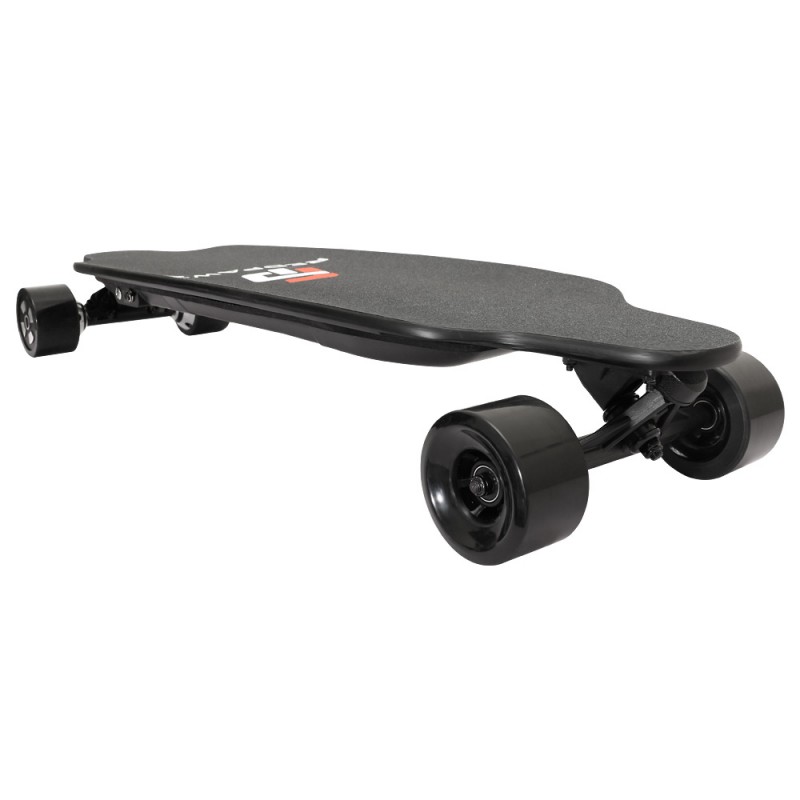
- Electric Skateboards – skateboards powered by electric motors (Figure 2)
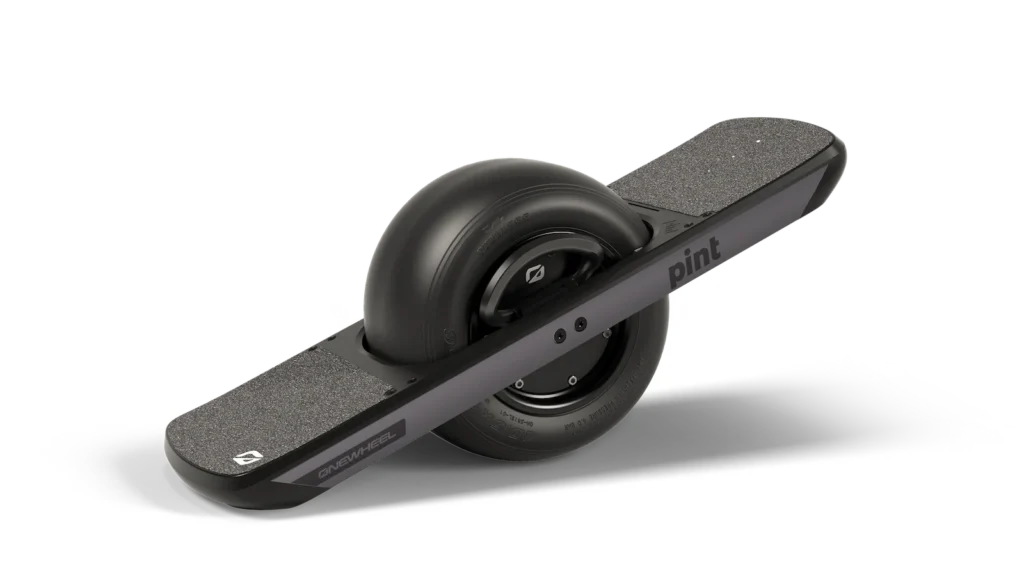
- Onewheel – skateboard with a single wheel in the center of the board (Figure 3)
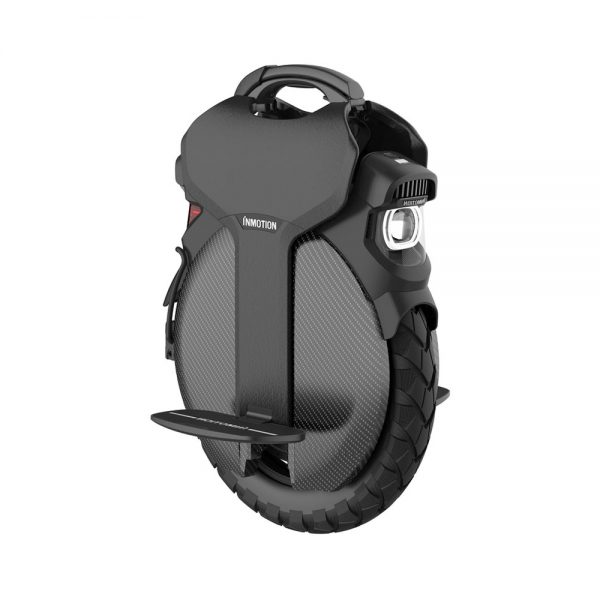
- Electric Unicycle – a self-balancing, single-wheeled transportation device where riders stand on either side of a wheel and control speed by shifting their weight (Figure 4)
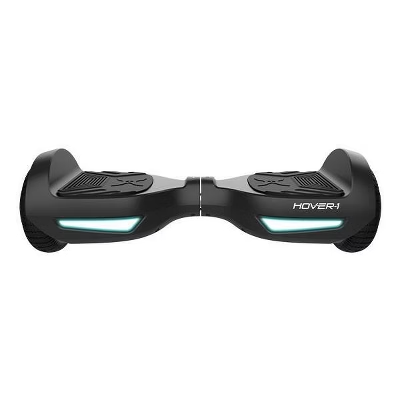
- Hoverboards – self-balancing scooters ridden by standing on a platform with two wheels (Figure 5)
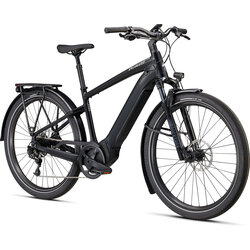
- Electric Bikes (E-bikes) – bicycle equipped with fully operable pedals and an electric motor. E-bikes can have various looks based on the manufacturer and all classes of an e-bike can also look very similar (Figure 6). E-bikes can be divided into three classes.
- Class 1: Pedal-assist only; motor limits speed to 20 mph
- Class 2: Throttle-assist, and/or pedal-assist; motor limits speed to 20 mph
- Class 3: Pedal-assist only; motor limits speed to 28 mph; speedometer is required; operation by those with a motor vehicle license only
Section 2: Where Devices May Operate
What devices are allowed for use on greenways varies by jurisdiction and is changing as technology changes; this is especially true for the continually evolving personal electric vehicles market. Recommendations should take into consideration the context of the greenway and what users may expect to operate in that area. At the inception of GRG, greenways were designed for use by pedestrians and non-motorized vehicles (bicycles, rollerblades, skateboards, scooters, wheelchairs, strollers, etc.), except for those with mobility barriers (i.e. motorized wheelchairs and mobility assist scooters). Since that time, greenways have expanded into communities w/ golf cart ordinances that specifically authorize the use of golf carts on sidewalks and paved trails. And the ever-expanding development of personal electric vehicles has warranted updating ordinances to allow their usage where appropriate. All vehicle usage on greenways must be in accordance with Missouri state laws. Recommendations for devices to be authorized on greenways include the following unless posted otherwise by operating partners:
- All mobility devices,
- Non-motorized bicycles,
- Class 1 and Class 2 e-bikes
- Small PEVs such as battery-operated scooters, onewheels, unicycles and hoverboards.
Trail Categories and Classifications: If an agency has various trails and greenways in their jurisdiction, it may be necessary to manage those facilities differently and they may have different types of uses authorized dependent upon the intended usage of those facilities. St. Louis County Parks manages a variety of trails, and they have developed four trail categories (Maintained, Un-Maintained, Shared and Unauthorized) and three classifications (Backbone, Feeder and Specialized). These categories and classifications are outlined in their Trails Department Policy and are a good resource to consider.
Section 3: Speed Considerations
Trails and greenways are more often being assigned speed limits to help control excessive speeds along multiuse pathways. AASHTO (American Association of State Highway and Transportation Officials) recommends a design speed of 20 miles per hour. To accommodate a wide variety of users, GRG recommends designing greenways and trails for a speed of 12 mph. Many partner agencies are setting greenway and trail speed limits of 15 mph. In areas where traffic may be greater, a 10 mph may be warranted. In addition, agencies may state that under certain conditions, the recommended speed of users should be slower than the posted maximum.
Section 4: Conduct
Great Rivers Greenway has developed a series of educational materials about Greenway etiquette and planning your visit. This material includes common trail etiquette including stay to your right, announce when passing, no unauthorized vehicles, not littering and wearing a helmet among others. Recommendations for trail etiquette and rules are as follows (and can be found at the bottom of the page here):